
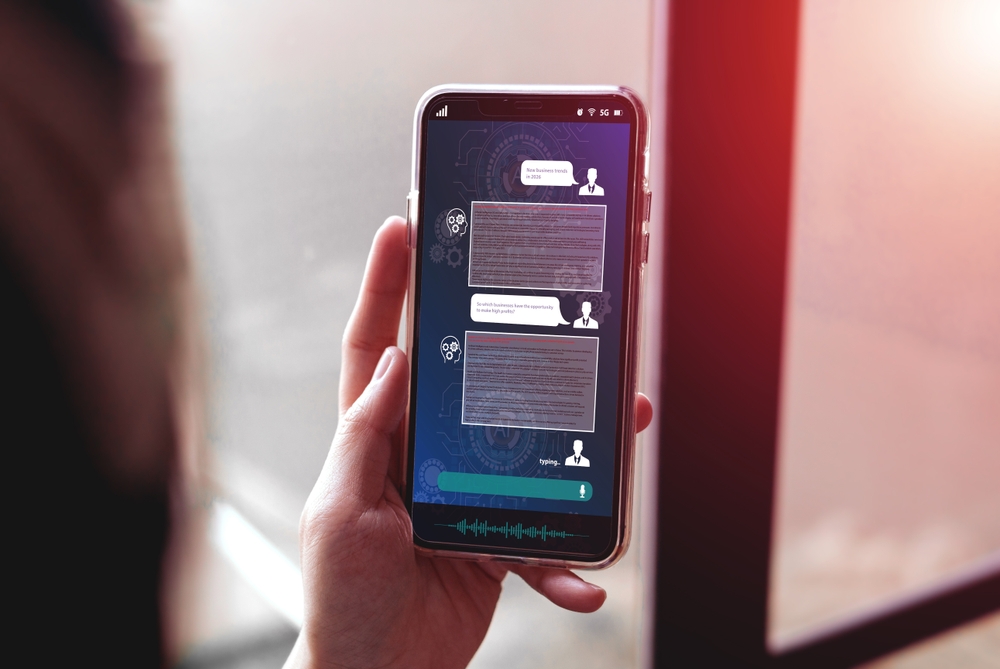
HM Revenue & Customs (HMRC) has recently launched a new artificial intelligence chatbot called GOV.UK Chat, aimed at answering taxpayers’ questions online. On the surface, this seems like a positive development: quicker answers, no waiting on hold, and readily available guidance. What’s there not to like? But would you trust it with your tax?
The concept behind the chatbot is straightforward. The government believes that a significant number of common queries could be addressed online, saving time for taxpayers and relieving the pressure on HMRC helplines.
For simple questions, such as how to find your National Insurance number or basic deadlines, the chatbot could be quite helpful.
Let’s be honest, we know many of you have spent longer than you’d like waiting to speak to someone at HMRC for just these types of questions. Therefore, any initiative that reduces that wait time can feel like a step in the right direction.
But Here’s the Catch
The chatbot doesn’t draw its answers from tax legislation or detailed HMRC manuals.
Instead, it pulls answers from HMRC’s public guidance on GOV.UK. Answers are drawn entirely from the UK government’s curated database, which contains over 80,000 public guidance pages relating to taxes, benefits, and entitlements.
That might not sound like a big difference, but it is.
Guidance is designed to be general and easy to understand, but it does not deal with:
- grey areas
- complex tax situations
- or the nuances that apply to your specific circumstances
So, while the chatbot might get you partway there, it doesn’t necessarily give you the full picture. What’s more, at no point will data be pulled from your personal tax history, so even simple questions like “is my PAYE code correct” or “is my tax return processed” cannot be answered. For these types of inquiries, you will be directed to a real person for assistance.
Would You Rely on It for a Key Decision?
This is where it becomes more of a practical question.
If you’re asking:
- “When is my tax return due?” the chatbot is likely fine.
But if you’re asking:
- “Can I pay my child through the business?”
- “What’s the best way to extract profits?”
- “How do these rules apply to my situation?”
That’s where things become less clear.
Tax isn’t simply about rules; it’s about how they apply to you. This is when accountants like us become the go-to resource.
A Wider Trend We’re Seeing
This move is also part of a broader shift.
Government departments are increasingly using technology to:
- streamline processes
- reduce demand on call centres
- make services more “self‑serve”
And while that improves efficiency on their side, it can sometimes feel as though more responsibility is being pushed back onto the taxpayer.
You’re expected to:
- find the answer
- interpret it correctly
- and apply it to your own situation
That’s a lot to take on when you’re already running a business or managing day‑to‑day life.
It could therefore be very tempting, in the interest of saving time, to use the Chatbot or another AI, such as ChatGPT or Copilot.
You’ve got to remember you are still legally responsible for getting your taxes correct even if AI provides you with the guidance.
It’s the same as asking AI to produce your rental statement or even your full set of accounts. We know this can be done even at this early stage of what is now commonly referred to as the third industrial revolution, Artificial Intelligence.
But is the advice reliable? Does it consider your personal circumstances? The short answer is no, not yet.
On a similar note, more people are now seeking financial and tax advice through social media. While many content creators are responsible and aim to educate, not all advice found online is accurate. So be careful if you are looking for tax tips and acting upon them without speaking to a human professional.
So What Should You Do?
When using the HMRC chatbot, it’s worth making the most of it. It may save you time and even help you grasp the basics. However, before making decisions that could impact:
- your tax bill
- your business structure
Remember, financial and tax advice should be personalised to your specific circumstances. We strongly recommend speaking with a professional before making any decisions.
Final Thoughts
Technology will continue to play a bigger role in how we interact with HMRC; that much is clear. And in many ways, that’s a good thing.
But when it comes to tax, accuracy matters more than speed. A quick answer is helpful, but
the right answer is essential.
And that’s where speaking to an accountant or tax adviser still makes all the difference. They don’t just give you an answer; they help you understand what that answer means for you.
We are here to help you because we are serious about you and your ambitions. If you have any questions, you should always contact your normal manager first.
If you are not yet working with us, here’s who we help. Or you can email our tax manager Tulay at tulay.sal@myersclark.co.uk.
You can get full details on the Gov.UK Chat here.