
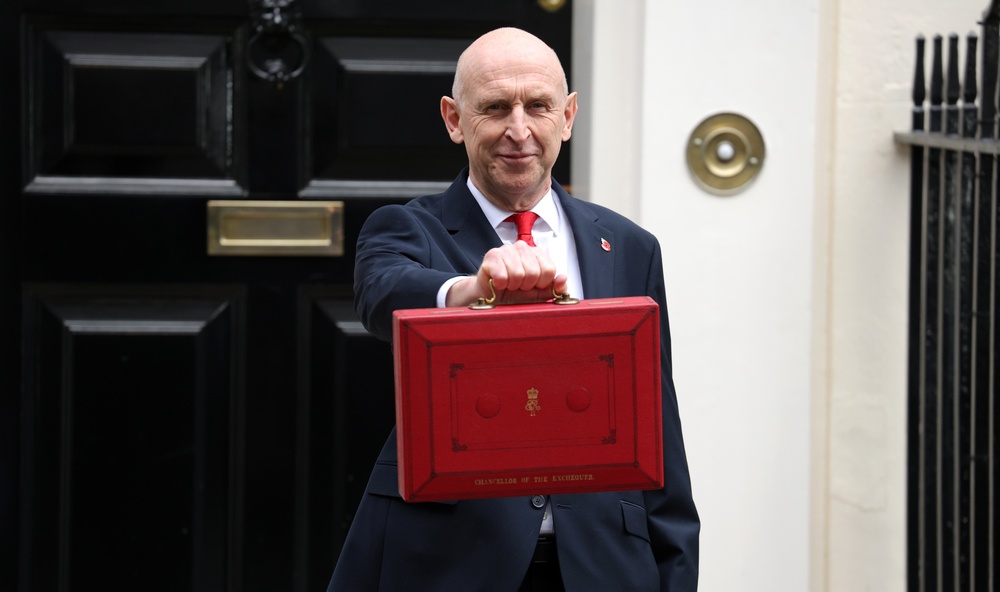
The Chancellor of the Exchequer, John Healey, presented us with his first Budget yesterday. It felt like a Budget of lots of small announcements, with nothing pointing to a major shift. In this blog, we look at the major announcements and the areas where you could be affected.
Personal allowances and tax rates remain unchanged unless mentioned below.
Personal Taxes & Landlords
-
Landlords and Savers
The Budget contained some unwelcome news for both savers and landlords.
From 6 April 2027, the income tax rates on savings income will increase by a further 2%, on top of the increases announced last year. This means that savings income could be taxed at 24%, 44% and 49%, depending on your tax band.
Landlords will also face higher taxes. Property income rates will rise by a further 2% from April 2027, taking them to 24%, 44% and 49%. For many landlords, this adds to other challenges, including higher Stamp Duty costs, the end of the Furnished Holiday Let regime, Making Tax Digital, and the ongoing impact of the Renters’ Rights Act.
With rising tax and regulatory pressures, some landlords may revisit whether property ownership still aligns with their long-term plans and whether alternative structures, including incorporation, are worth considering.
If you are one of those landlords and wondering about your next steps, please get in touch with your usual manager for a quick chat.
-
Tax Break for Pensioners
One of the more positive announcements was the introduction of a new Pension Tax Allowance from 2027/28.
The measure is designed to ensure pensioners with modest incomes don’t pay tax simply because the State Pension exceeds the frozen Personal Allowance. The allowance will be applied automatically and is expected to benefit lower-income pensioners most. Where income exceeds the State Pension, the allowance will be reduced by £1 for every £3 of excess income.
Employment Taxes
There’s some welcome news for employees and employers who claim mileage.
From 6 April 2027, the increased mileage rate of 55p per mile for the first 10,000 miles will become permanent. The rate for mileage over 10,000 miles will also increase from 25p to 35p per mile. Rates for passengers, motorcycles and bicycles remain unchanged.
There’s also good news for employees claiming work-related expenses. From April 2028, the £2,500 threshold that forces some employees into Self Assessment to claim expenses will be removed, simplifying the process for many people.
For employees who travel for work, the benchmark subsistence rates are increasing significantly. The allowances have increased to match rising costs over the years. For reference, the allowances were last updated in 2019/2020. The new rates are as follows:
- over 5 hours: £20 (up from £5)
- over 10 hours: £60 (up from £10)
- over 24 hours: £75 (replacing the previous ‘over 15 hours’ rate of £25)
Overall, these changes should make it simpler and more generous for many employees and businesses to claim legitimate business travel and subsistence expenses.
Capital Gains Tax
One of the more interesting Budget announcements was the introduction of a new Founders’ Relief, designed to reward entrepreneurs who have started and grown successful, innovative UK businesses. It looks like an interesting way to reward entrepreneurship, but how many businesses will actually meet all these strict conditions?
Key features include:
- A 10% Capital Gains Tax rate on qualifying business disposals.
- A lifetime limit of £10 million of qualifying gains.
- Available on disposals made on or after 6 April 2027.
To qualify, founders must generally:
- Have owned at least 25% of the company from the point the trade began.
- Have held those shares for at least five years before disposal.
- Have been UK resident for at least five continuous tax years before the sale.
The company itself must also meet several conditions, including:
- Being subject to UK Corporation Tax.
- Being a genuine trading business.
- Having turnover of at least £10 million in the year before disposal.
- Employing at least 15 qualifying full-time employees.
In addition, businesses must demonstrate growth and innovation by meeting at least two out of three tests relating to turnover growth, employee growth, or R&D investment. These tests look difficult for an average SME to meet.
Business Asset Disposal Relief (BADR)
Alongside the introduction of Founders’ Relief, the Government has confirmed that the lifetime limit for Business Asset Disposal Relief (formerly Entrepreneurs’ Relief) will reduce from £1 million to £500,000 for disposals made on or after 6 April 2027.
If you’re a business owner considering a future exit, restructuring, or succession plan, now is a good time to think about your goals. Perhaps have a chat with us because six months will fly by.
Business Taxes
Earlier this year, the Government consulted on plans to modernise how companies’ distributions are taxed. After feedback from businesses and advisers, it confirmed the reforms will go ahead, although it will adjust some elements before introducing the final legislation.
The aim is to create a fairer and more consistent system, particularly where business owners extract profits from their companies.
The key areas being targeted are:
- Profit extraction – The Government wants to prevent situations where business owners use complex structures to convert what would normally be taxable income into capital gains taxed at lower rates.
- Overseas companies – Payments and loans from overseas companies will be brought closer into line with the way similar payments from UK companies are taxed.
- Business exits and reorganisations – Reliefs for company share buybacks and demergers will be modernised to better support genuine commercial transactions, succession planning and business exits.
- Anti-avoidance rules – Existing rules will be simplified and updated to provide greater certainty for businesses and their advisers.
At this stage, many of the finer details have not yet been published, so it remains unclear which parts of the original proposals will stay the same and which will change.
The new rules are expected to take effect from April 2028, with draft legislation due for consultation during 2027.
For businesses making capital investments, the first-year allowance (FYA) is increased from 40% to 50% and the normal annual written-down allowance (WDA) is reduced from 14% to 12%.
Finally, it looks like from next April Electric Cars will no longer qualify for the 100% allowance and will instead receive a reduced WDA of 12%. So, if you are thinking of getting an electric car, you do not have much time.
Tax Compliance
Good news for businesses and landlords joining Making Tax Digital for Income Tax (MTD for ITSA) from April 2027. The current “soft landing” period will be extended to new joiners next year.
This means taxpayers entering the system in 2027/28 will not receive penalty points for late quarterly updates during their first year in MTD. However, penalties can still apply for late submission of the end-of-year tax return.
The Government also plans to move Self-Assessment taxpayers toward more regular tax payments, with a target implementation date of April 2029.
The proposal is that, instead of making larger payments twice a year, taxpayers would make smaller monthly or quarterly payments directly to HMRC throughout the year. The system should allow those with seasonal or fluctuating incomes to adjust payments if profits fall.
While the detailed rules have not yet been published, the aim is to make tax payments more manageable by spreading the cost across the year rather than facing large bills in January and July. We will of course keep you posted as time progresses.
This is a good time to remind you to follow us on our Social Media channels and make sure you receive our weekly blogs.
Final Thoughts
At first glance, the changes may not seem like much, but there is enough to think about. Whether you are employed, a saver, a landlord, a pensioner, looking to pass on the business, or starting a new one, there is plenty to consider.
Other announcements include keeping the ISA limits, removing the Lifetime ISA and replacing it with the First-time Buyer ISA, R&D tax relief, EMI 2, and more. We have not covered everything here. However, over the coming days and weeks, we will be familiarising ourselves with many new tax changes from this Budget.
You may want to discuss the details mentioned here with us if you are working with us; in which case, please get in touch with your normal manager.
If you are not yet working with us but would like to work with us, here’s who we are.